
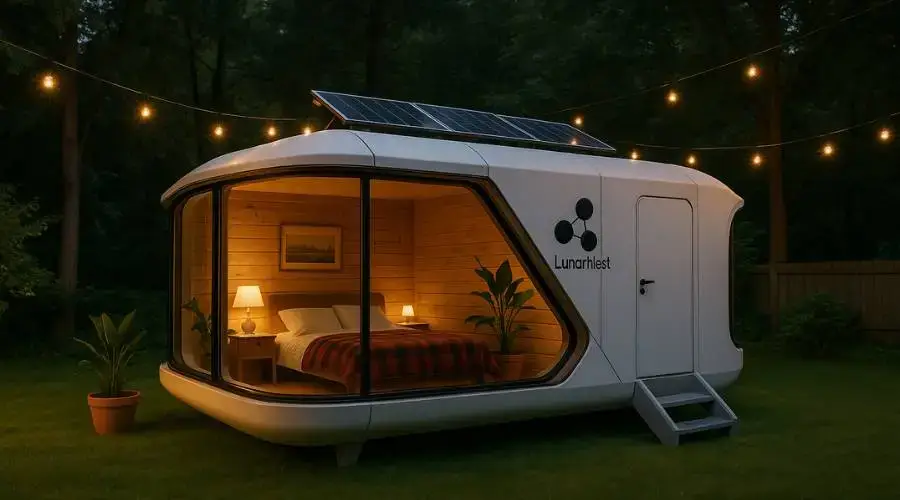
Off-grid tiny homes rely on independent systems — including solar, battery storage, rainwater capture and standalone wastewater solutions — to support a low-impact, self-sufficient lifestyle without depending on standard utilities.
Off-grid tiny homes in Australia use solar, batteries, rainwater systems and efficient design to support sustainable, low-impact living without traditional utilities.
Quick Takeaways
- Why off-grid: Greater independence, reduced utility bills and a lower environmental footprint.
- Who it’s for: Rural property owners, retreat hosts, downsizers and anyone wanting a self-sufficient lifestyle.
- What to consider: Solar capacity, battery storage, water collection, wastewater systems, insulation and climate.
- How we help: At Lunarnest, our prefab pods and micro homes are commonly chosen for off-grid setups due to their strong insulation, durable construction and compatibility with solar systems.
Tiny homes and off-grid living: why it’s gaining momentum
Tiny homes across Australia continue to grow in popularity as more people seek flexible, sustainable and intentional ways to live. If you’re still exploring the broader movement, our tiny homes in Australia overview provides helpful context.
Off-grid living is a natural extension of that shift. It’s about reducing dependence on traditional utilities and shaping a lifestyle guided more by your land than by rising energy costs. Many people begin with an interest in tiny homes and soon discover that off-grid compact living supports not just affordability — but long-term wellbeing and environmental alignment.
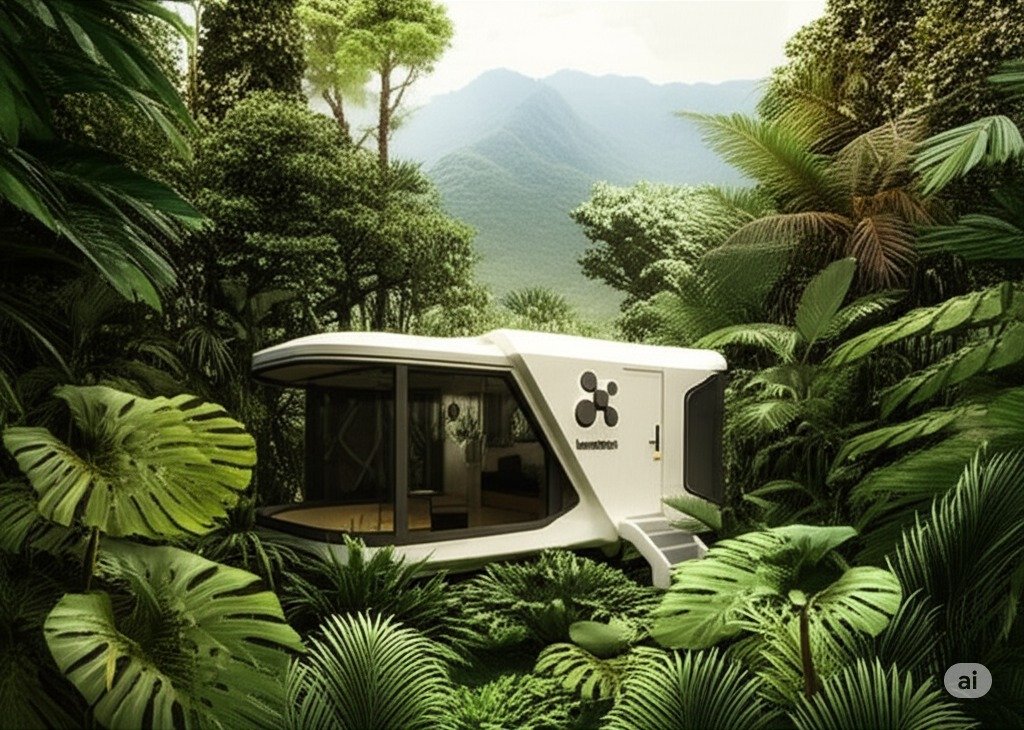
How off-grid foundations work
Off-grid living relies on a core group of systems working together: power, water, waste and climate control. In a compact dwelling, these systems become even more efficient, making independence easier to achieve.
Lunarnest’s prefab pods, built with high insulation values, airtight construction and efficient layouts, perform exceptionally well in off-grid conditions because they require less energy for heating, cooling and daily use.
Solar power and battery storage
Solar is the backbone of most off-grid tiny homes. To size a system properly, consider:
- how much sunlight your site receives
- your typical daily energy use
- how many low-sunlight days your battery needs to cover
A typical off-grid setup includes:
- solar panels
- a lithium battery bank
- an inverter
- high-efficiency appliances
If you want a broader breakdown of long-term costs — including solar, batteries and utilities — our tiny home living cost guide helps map realistic off-grid budgets.
Water: tanks, pumps and rain capture
Most off-grid homeowners pair rainwater collection with filtration and tank storage. Rural properties typically have room for larger tanks, while coastal regions benefit from more frequent rainfall.
Compact homes naturally use less water, helping tanks last longer between rain events. Prefab pods perform well in this area because their kitchens and bathrooms are designed around efficient, low-flow fixtures from the start.
Wastewater and septic systems
Council rules determine which wastewater systems you can install. In NSW, classification plays a big role in whether septic, composting or greywater systems are permitted.
If you’re unsure how NSW councils treat tiny homes, our guide to tiny home regulations in NSW walks through zoning, approvals and how small dwellings are assessed across different regions.
Many rural blocks already support septic infrastructure, which can make off-grid installations smoother and more cost-effective.
Climate, insulation and comfort
This is one of the biggest challenges in off-grid living. Poor insulation causes temperature extremes, draining batteries and forcing heating and cooling systems to work harder.
Prefab pods, built with consistent insulation and controlled manufacturing, maintain stable internal temperatures with minimal energy. This helps solar and battery systems last longer and makes off-grid living far more comfortable.
Interior design that supports off-grid living
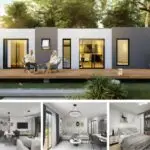
Interior design plays a surprisingly important role in off-grid tiny homes. When your power, water and heating depend on efficient systems, the way you arrange and furnish the space directly affects energy use, comfort and day-to-day practicality.
Natural light is one of the biggest advantages you can design for. Larger windows, thoughtful orientation and clear sightlines can dramatically reduce reliance on artificial lighting. Warm, neutral finishes help a compact home feel grounded and quiet — especially valuable when you spend more time indoors during cooler months.
Because every centimetre counts off-grid, clutter management becomes essential. Well-planned interiors support calmness, functionality and lower energy demand.
Some design principles that make off-grid tiny living feel smoother include:
- maximising natural light through window placement, sizing and colour choices
- using built-in or integrated storage to keep surfaces clear
- choosing multifunctional furniture that supports sleeping, working or dining
- selecting insulating materials that maintain stable temperatures and reduce solar and battery load
- keeping circulation paths open so the space feels larger without increasing the footprint
Thermal comfort is another crucial factor. The materials you use — from insulated wall panels to timber textures — influence internal temperature stability, which reduces strain on off-grid systems during extreme weather.
If you’re planning your layout, our guide on tiny home interior design offers helpful ideas for small, off-grid pods, including storage planning, furniture scaling and light distribution.

Where off-grid tiny homes work best in Australia
Off-grid tiny homes thrive in locations that offer:
- acreage properties with open solar access
- coastal hinterlands with steady rainfall
- bushland or valley retreats designed as wellness cabins
- eco-tourism and farm-stay sites offering nature-based accommodation
If you’re comparing off-grid tiny homes with other small-living choices, our tiny homes and granny flats guide can help clarify how each structure suits different long-term goals.
Off-grid tiny homes vs off-grid prefab pods
Many people start by exploring mobile tiny homes, only to discover that long-term off-grid living requires stronger insulation, durable materials and a solid foundation.
Prefab pods offer:
- better insulation
- lower maintenance
- higher efficiency
- fewer climate fluctuations
- more predictable off-grid performance
Mobile tiny homes can work off-grid, but prefab pods provide a more stable, long-term experience — especially in rural or semi-remote environments.
Start Your Off-Grid Journey, Today
If off-grid living feels like your next step, choosing a thoughtfully designed compact home is the foundation of long-term independence. With strong insulation, warm interiors and compatibility with solar and battery systems, our prefab pods and micro homes provide a calm, efficient base for sustainable living.
Speak with Lunarnest for a personalised consultation, or download our catalogue to explore designs suited for off-grid and hybrid setups.
Frequently Asked Questions
Are off-grid tiny homes legal in Australia?
Yes — but requirements for wastewater, fire safety and zoning must be followed, especially on rural or environmentally sensitive land.
Do off-grid tiny homes need council approval?
Often yes, particularly if the structure is fixed in place or requires plumbing, sewer, or electrical services.
Can you live off-grid full-time?
Yes, provided your systems are properly sized for energy, water and waste needs.
Is solar enough to run a tiny home?
In most cases, yes — especially when paired with strong insulation, efficient appliances and adequate battery storage.
Are prefab pods suitable for off-grid living?
Absolutely. Their durable construction and high insulation levels reduce energy demand and improve the stability of solar and battery systems.