
Tiny home regulations in NSW depend on whether the dwelling is fixed, semi-permanent or moveable. Councils classify tiny homes differently based on zoning, land type, and whether the structure is intended for long-term living.
Tiny home regulations in NSW vary by council and classification, making it essential to understand zoning, approvals and land requirements before installing a tiny home.
Quick Takeaways
- Why rules matter: Regulations determine where a tiny home can be placed, how long it can stay and whether it counts as a secondary dwelling.
- Who this applies to: NSW homeowners, rural landowners, Airbnb hosts and anyone planning long-term tiny living.
- What to check: Zoning, land use, dwelling classification, setbacks, servicing and whether the structure is fixed or moveable.
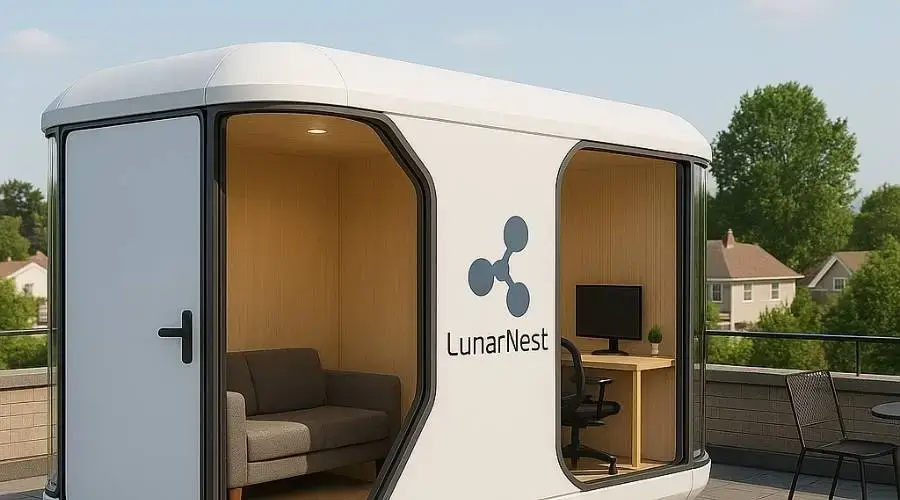
- How we help: At Lunarnest, our prefab pods and compact modular dwellings provide a stable, fixed alternative to mobile tiny homes — often resulting in clearer approval pathways for NSW sites.
Why regulations in NSW feel confusing
If you’ve been researching tiny homes across NSW, you’ve likely noticed something: the rules aren’t consistent. Tiny homes don’t sit neatly within one category. Some councils treat them like caravans, others see them as secondary dwellings, and many fall somewhere in between.
That’s why homeowners come to us asking for clarity. They’re not unsure about tiny living — they’re unsure how it fits into NSW planning rules.
Prefab pods simplify this because they behave more like small, architecturally built dwellings, not caravans. This often leads to clearer approval pathways, especially on blocks already suited to compact living.
If you’re still exploring tiny living as a whole, our guide to tiny home living costs in Australia is a good companion when planning budgets and long-term expectations.

How NSW councils classify tiny homes
In NSW, how a tiny home is classified affects everything: placement, approvals, occupancy limits, servicing and long-term viability.
Councils typically classify tiny homes into one of three categories:
1. Moveable dwellings (caravans)
This category includes many tiny homes on wheels, which sit on a trailer chassis and are treated similarly to caravans.
A structure may be considered a moveable dwelling if:
- It remains mobile
- It can be legally towed
- It is not permanently fixed to the ground
However, many NSW councils place strict time limits on how long a moveable dwelling can be occupied on private land. Some allow short-term stays only, others require periodic relocation, and many restrict full-time living.
2. Secondary dwellings (granny flats)
If a tiny home is fixed in place and built as a permanent, non-movable structure, councils may classify it as a secondary dwelling.
Lunarnest’s prefab pods, micro homes and compact modular dwellings usually fall closer to this category because:
- they sit on foundations
- they behave like small permanent homes
- they follow a clear building and installation process
Being classified as a secondary dwelling typically provides:
- clearer approval pathways
- predictable servicing requirements
- compliance with local building standards
- eligibility for long-term occupancy
If you’re weighing the differences between moveable tiny homes and fixed dwellings, our guide on tiny homes and granny flats can offer clarity.
3. Camping and caravan exemptions
Some NSW councils allow caravans or small movable dwellings to be used temporarily under “camping” exemptions.
These rules vary significantly, but typically:
- occupancy is limited
- stays may require periodic relocation
- long-term living is not permitted
- exemptions can change based on zoning or land type
These exemptions can be useful during transitional periods but should not be relied on for permanent tiny home living.
Zoning and land considerations
Zoning determines what type of structure can be placed on a parcel of land. In NSW, zones like R2 (Low Density Residential), R5 (Large Lot Residential), RU2 (Rural Landscape) and E4 (Environmental Living) all have different rules and allowances.
Important questions to confirm with your council include:
- Does your zone allow secondary dwellings?
- Is there a minimum lot size?
- What are the required side and rear setbacks?
- Does the land fall within bushfire, flood or environmental overlays?
Rural and lifestyle zones often have more flexibility, especially for guest accommodation, retreats or additional small dwellings. This is why so many Lunarnest clients install prefab pods on acreage, farms or semi-rural blocks.
If you’re planning a retreat-style cabin or weekend stay, our page on Airbnb Hosting may offer further clarity.
Approvals: Do you need a DA?
Whether you need a Development Application (DA) depends entirely on how your tiny home is classified under NSW regulations.
You may need a DA if:
- your tiny home is fixed to the land
- you intend to use it as a secondary dwelling
- plumbing, sewer or significant services need installation
- your site has environmental constraints (e.g., bushfire, flood)
A fixed prefab pod — such as our S5 Studio Pod or N7 One Bedroom Pod — usually follows the same approval pathway as a small dwelling, which provides clarity and long-term compliance.
You may not need a DA if:
- your tiny home qualifies as a moveable dwelling under caravan rules
- your council allows temporary stays under camping provisions
- the structure is mobile and remains unfixed
However, not needing a DA does not guarantee full-time occupancy.
Some NSW councils allow occupancy only for a limited number of days per year.
This is why many homeowners choose prefab pods:
- the approval pathway is clearer
- occupancy rules are more stable
- councils generally see them as compliant long-term structures
Services: power, water and wastewater
NSW councils require permanent dwellings — even small ones — to meet health and safety standards.
You may need:
- Potable water (mains or tank)
- Electricity (grid, solar or hybrid)
- Wastewater treatment (sewer, septic or composting)
- Stormwater management
If you’re exploring sustainable setups, our guide on off-grid tiny homes offers practical insight into powering compact dwellings independently.
Fire, flood and environmental overlays
NSW has strict requirements for bushfire-prone land, which affect fixed tiny homes and prefab pods.
You may need:
- fire-resistant materials
- ember protection
- compliant setbacks
- BAL-rated windows and doors
- appropriate landscaping
Flood overlays may require:
- raised floor levels
- specific drainage solutions
- particular siting on the block
Environmental zones may restrict:
- earthworks
- vegetation clearing
- service trenching or installation
Prefab pods help simplify this process because they:
- follow predictable engineering
- use consistent insulated panel systems
- arrive with documentation councils recognise
For some sites, this clarity can save months of uncertainty during the approval process.
Where tiny homes work best in NSW
Every council approaches tiny homes differently, but we consistently see three types of NSW properties where tiny homes and prefab pods integrate most smoothly:
Rural and lifestyle properties
These blocks offer more space, more privacy and more flexibility. They are ideal for compact dwellings used as:
- retreats
- studios
- guest pods
- short-stay cabins
This is why many Lunarnest clients place prefab pods on acreage, farms and semi-rural lots.
Large suburban blocks
If your zoning permits a secondary dwelling, a prefab pod can function beautifully as a calm, modern granny-flat–style space — with the comfort and durability of a permanent small home.
Holiday parks, retreats and tourism sites
These locations often operate under zoning that already allows multiple dwellings or cabins. Prefab pods work extremely well here as a scalable accommodation solution, especially for retreat operators or tourism-focused properties.
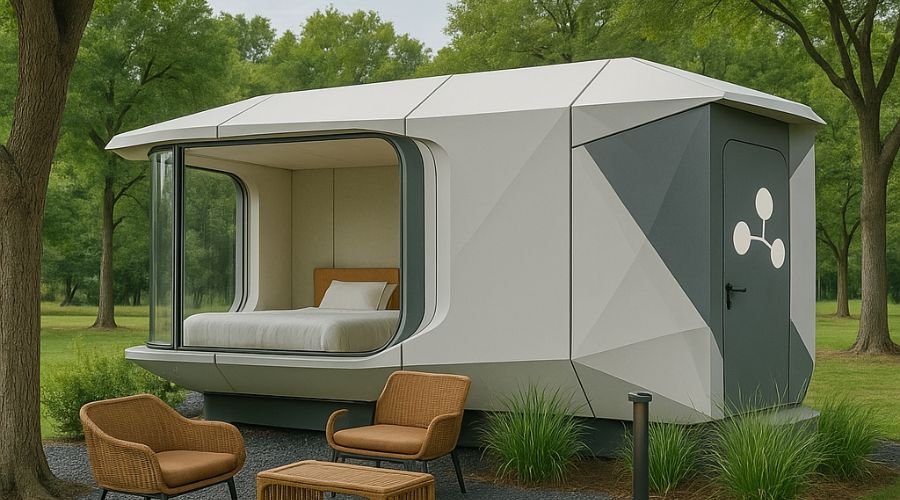
Why prefab capsule homes simplify NSW compliance
Moveable tiny homes often face uncertainty around:
- how long they can legally stay
- where they can be occupied
- what utilities they can connect to
Prefab pods, by comparison, offer clarity because they:
- sit on foundations
- follow small-dwelling conventions
- can be approved similarly to other fixed structures
- meet requirements for wind, bushfire and climate performance
This is why many NSW landowners choose fixed prefab pods when their goal is long-term, stable tiny living — rather than relying on caravan-style rules with unclear occupancy limits.
If you’re planning your interior and want ideas for small-space layouts, our tiny home interior design guide offers practical inspiration.
Start Your Tiny Home Journey, Today
If you’re planning a tiny home in NSW, understanding your council’s requirements is essential for a smooth process.
If you’re imagining a compact, beautifully designed prefab pod crafted for Australian conditions, our team can help guide your next steps.
Speak with Lunarnest for a personalised consultation, or download our catalogue to explore designs created for long-term comfort and compliance.
Frequently Asked Questions
Are tiny homes legal in NSW?
Yes, tiny homes are legal in NSW, but rules vary by council depending on zoning and how the dwelling is classified.
Do I need council approval for a tiny home in NSW?
You may need approval depending on whether the structure is fixed, semi-permanent or mobile.
Can you live in a tiny home full-time in NSW?
Yes, as long as the dwelling meets council requirements for zoning, services and compliance.
Are prefab pods easier to approve than mobile tiny homes?
Often yes, because councils typically treat prefab pods as small permanent dwellings rather than moveable structures.
Where do tiny homes work best in NSW?
They work best on rural or lifestyle properties, tourism sites and suburban lots that permit secondary dwellings.